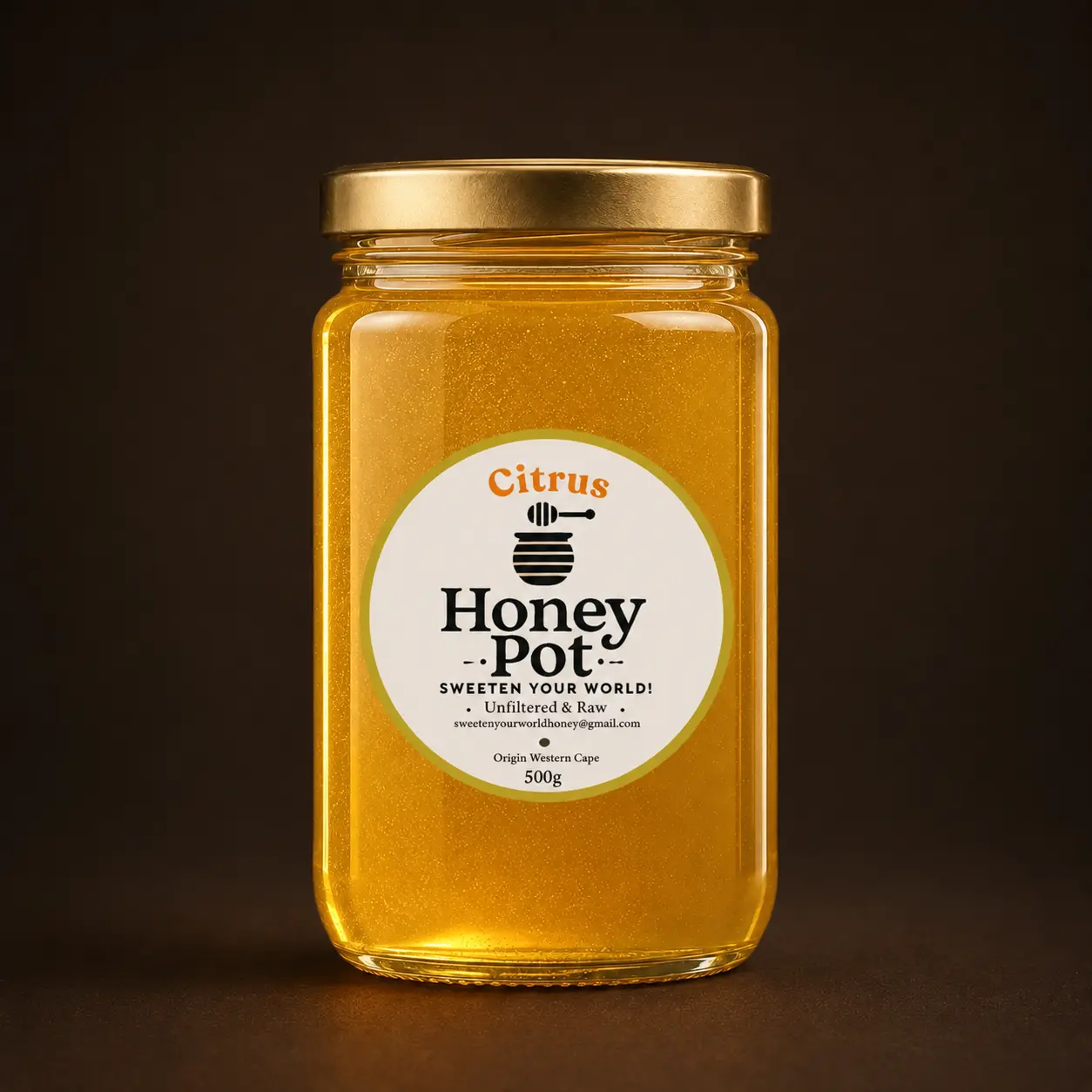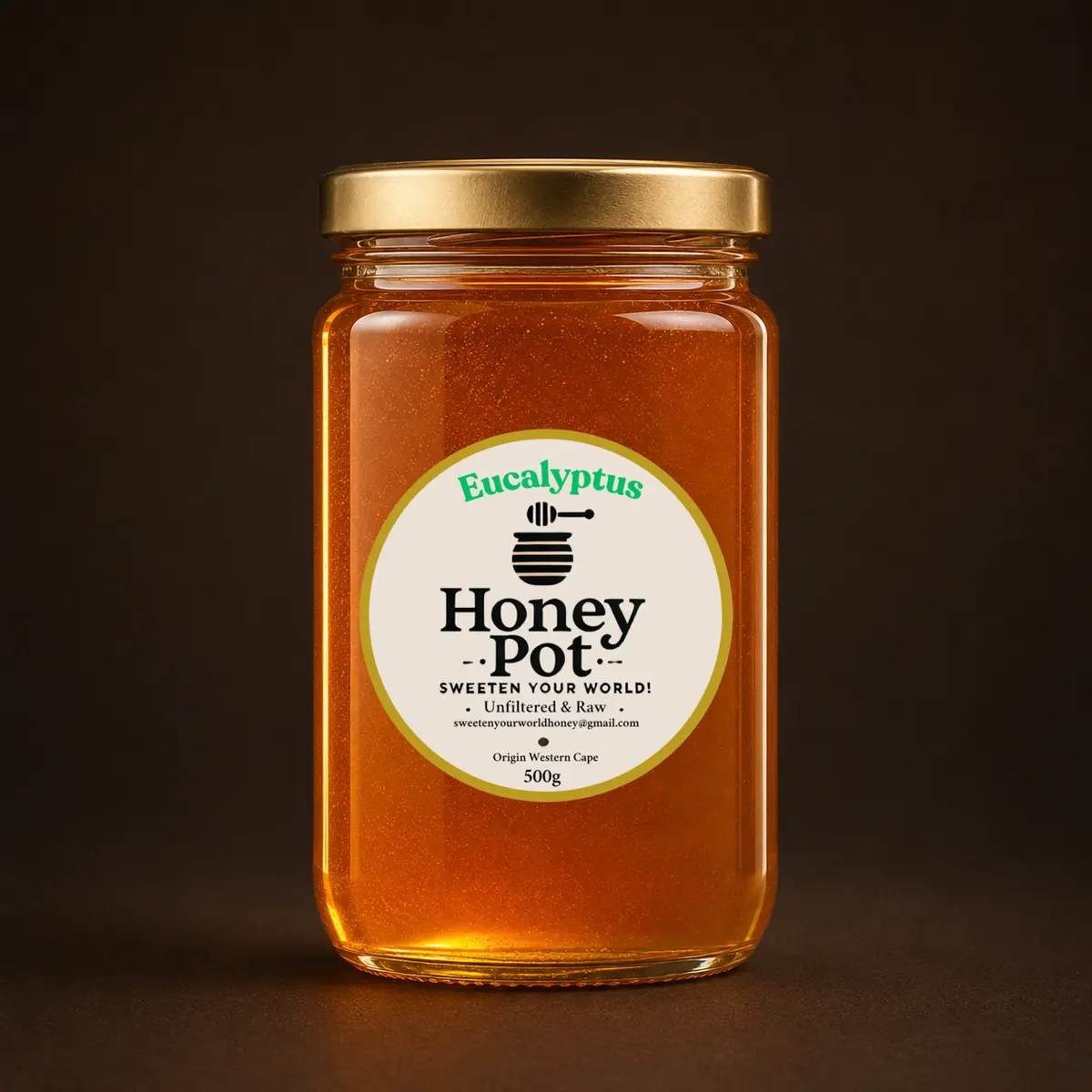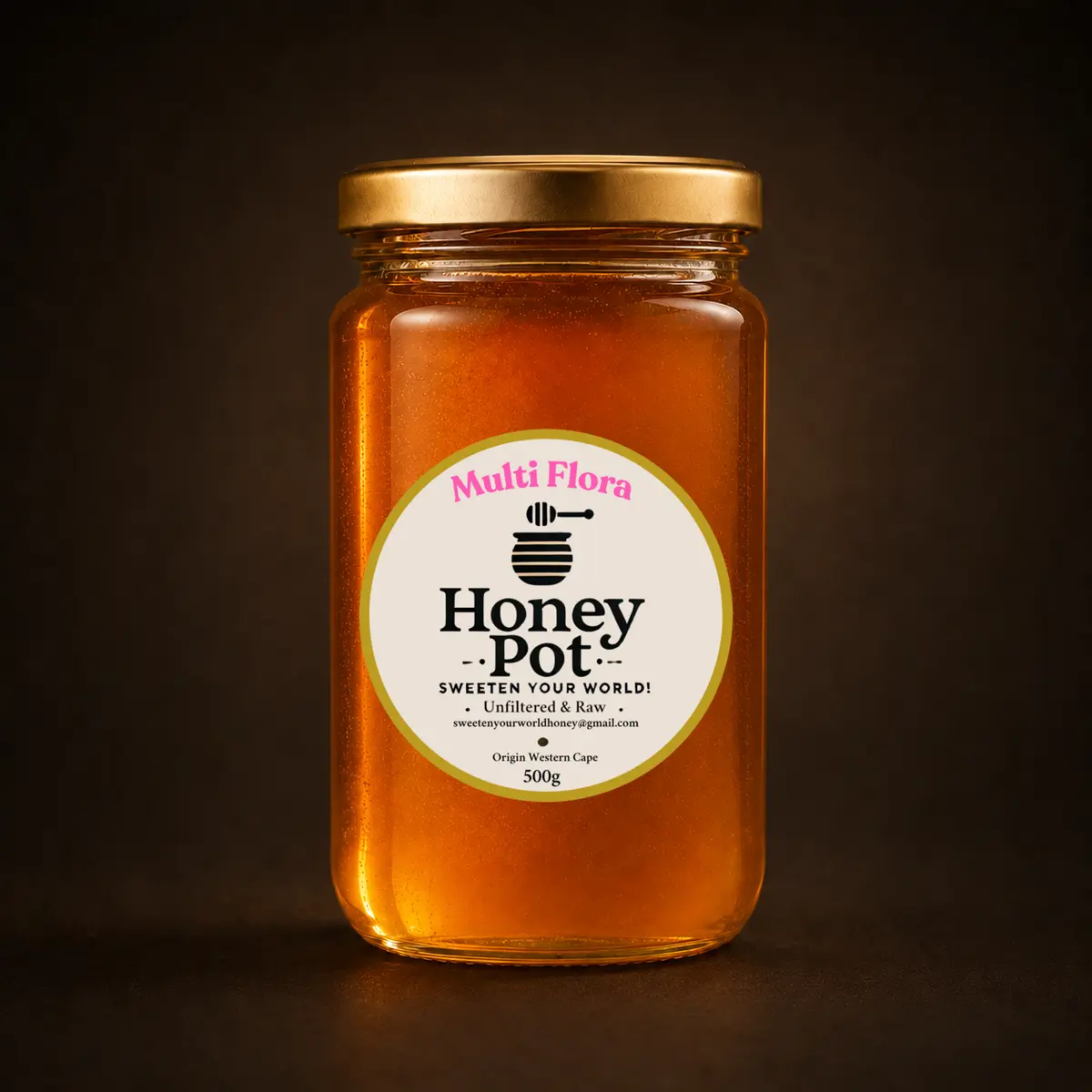
Quick answer
Crystallisation is a natural texture change in honey, not normally a sign that it has spoiled. Honey naturally contains sugars, and some of those sugars can gradually form crystals as the jar sits.
The simple remedy is gentle warmth. Keep the jar closed and stand it in comfortably warm water until the crystals begin to soften. Do not use boiling water, direct heat or a microwave.
Shop raw Western Cape honey →Why honey crystallises
Honey is a concentrated natural sugar solution. Glucose can separate from the liquid part and form crystals, especially when the particular floral source, sugar balance and storage temperature favour it.
That is why one Honey Pot varietal may stay runny for longer than another. Texture can differ naturally from harvest to harvest without changing the honey's character or intended use.
Crystals do not automatically mean the honey is bad
A clear jar is not automatically better honey, and a crystallised jar is not automatically old, fake or spoiled. The Codex honey standard recognises fluid, viscous and partly or fully crystallised honey as normal consistencies.
Use the product label and sensible storage as your guide. If a jar has a damaged seal or an unusual smell or fermenting appearance, contact Honey Pot before using it.
Crystallisation is a natural change in texture—not a reason to throw good honey away.
Use a gentle warm-water bath
Put the closed jar in a bowl of comfortably warm water, keeping the water level below the lid. Leave it for 10 to 15 minutes so the honey can warm gradually.
If the jar is still firm, replace the water with fresh warm water and repeat. A slow, gentle approach protects the honey better than trying to force it back to liquid quickly.
- Keep the lid tightly closed
- Use comfortably warm—not boiling—water
- Keep water below the lid
- Leave the jar for 10 to 15 minutes
- Repeat gently if needed
Avoid direct heat
Do not place the jar on a stove, use an open flame or heat it in a microwave. Direct or excessive heat is unnecessary and makes the process harder to control.
The aim is simply to soften the crystals slowly until the honey reaches a texture you enjoy. It may crystallise again later; that remains a normal possibility.
Store it to keep it easy to use
Keep the jar sealed in a stable room-temperature cupboard, away from direct sunlight and strong heat. Always use a clean, dry spoon so that extra moisture and food particles do not get into the jar.
For the full storage routine, read the linked raw-honey storage guide. It explains what to do with a fresh jar, a partly crystallised jar and a jar you use every day.
Watch the 30-second guide
How to soften crystallised honey gently
A short visual guide to returning crystallised honey to a more pourable texture with a comfortably warm-water bath.
Read the video transcript +
- Honey crystallised? It is a natural texture change.
- Keep the lid tightly closed.
- Stand the jar in a bowl of comfortably warm water, keeping the water below the lid.
- Leave it for 10 to 15 minutes, then stir slowly with a clean, dry spoon if needed.
- Repeat gently as needed. Never use boiling water, direct heat or a microwave.
- Once soft again, store the jar sealed at room temperature.
Responsible honey note
Honey is a food, not a medical treatment. Flavour, colour, texture and crystallisation can vary naturally by floral source, season and storage. Honey should never be given to a child younger than 12 months.
Sources and further reading
Honey Pot uses independent references for general honey facts while keeping product descriptions focused on our own current range.